Tuesday, 17 June 2014

Textures


Expressing textures throughout the use of different materials, incorporating tyvek with latex, PVA with hessian and bubble wrap with acetate and romeo. For thesesamples i stuck to a rustic colour palette to highlight the decay within the pieces. The use of layering through these samples creates a more tactile which was my intention. I wanted to capture the layering just like in my primary photographs to express the fragile and decrepit nature. I feel these samples where successful and showed me how well layering worked.

Primary Photography Response


To Respond to my primary photographs i wanted to create a peeling paint effect. I incorporated cellophane and paint which i then embossed, this led to the cellophane shrivelling up and cracking the paint. This was an effective technique which i developed by by including materials onto the surfaces to create a layered effect, i also stitched into some samples to increase the depth and to highlight the fragility of the piece. 


Responding to Alberto Burri's work


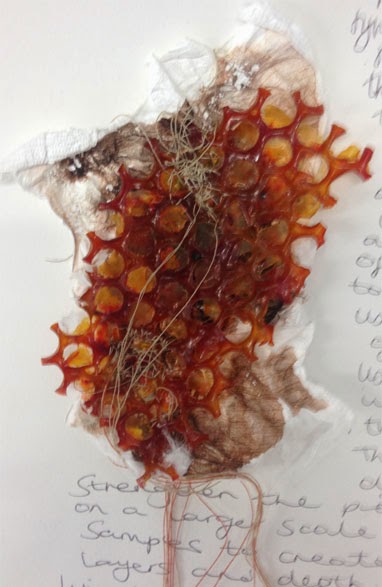
 I experimented with a layer of different plastics to respond to Burri's work using cellophane, plastic bags and bubble wrap. I encorporated a use of materials such as tissue paper, latex and layered masking tape with a use of colour to represent a decaying tone. I wanted to express the melting in Burri's work using an embossing tool to melt the plastics, this deteriorates the plastic, making holes and etchings to create rugged edges linking back to my primary photographs. 


Alberto Burri


Alberto Burri was an Italian Painter and Sculptor who incorporated different unusual materials into his paintings to create unique pieces. He used a selection of different PVC adhesives, plastic cements, resin and tar. I want to explore the use of similar materials such as acetate, cellophane and synthetic materials and the use of a embossing tool to melt and burn to create similar effects as Burri, as i find his work inspiring. I want to express decay throughout the fragile pieces including a dripping and bubbling effect of the cellophane created when melted. From researching Burri's work i intend to use his creativity of using different materials by adding a use of and and straw to incorporate more textural surfaces. 


Layering


To show a small response to Alberto Burri and Lynda Monk i encorporated tyvek and melted plastics such as acetate and shopping bags as they use these materials within their work as well as both using a use of layers. I also wanted to recreate the use of colour as both artists use a similar colour palette of rustic tones and the use of black and white. I found these shades expressed a corroding effect with the holes through the latex emphasising this more.


How could i expand on my development of these pieces? 


Development of the latex


Changing the colour of the latex by including paint within the mixture of rustic shades to highlight the decay effect. I also explored the use of machine stitch using bold colours such as orange and black to give a striking tone. I left multiple hanging threads to emphasise the decrepit nature of the piece. 


Experimenting with latex


I started my experimentation with the use of latex as a link to my stage 2 where i highly used PVA and slightly explored latex, from exploring the two i found that latex was a more effective technique to be as it has a better quality constancy, also it's easier to shape and to create different samples.


I experimented with the latex on different background such as bubble wrap to create different textual surfaces, i wanted to capture a rough and aged texture to portray a decaying piece. This bubble wrap latex is my favourite sample with the latex as it explores a interesting texture and portrays a decaying nature, more so when pulled apart    showing a crumbling effect.


I would develop these samples by adding stitch and hanging threads as this would symbolise the breaking and deterioration of the sample. Also combining them with independent materials to create a more textual surface.